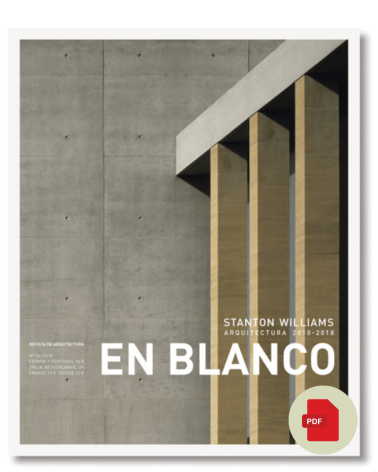
Stanton Williams

Alan Stanton

Paul Williams 

www.stantonwilliams.com

Stanton Williams is a London-based architectural practice founded in 1985 by Alan Stanton and Paul Williams. Since its establishment, the studio has developed a body of work characterised by a strong attention to context, materiality and spatial experience.

The practice operates within a tradition of architecture that understands building as a material and constructive discipline. Their projects focus on the relationship between space, light, structure and materials, avoiding the emphasis on iconic form or visual spectacle in favour of the physical and emotional experience of place.

A defining characteristic of their architecture is an interest in what has been described as a “tectonics of proximity”, an approach in which the relationship between the human body, materials and space plays a central role. In their buildings, materials such as concrete, stone and timber are used to construct complex spatial sequences and to generate intense architectural experiences.

Over the past decades Stanton Williams has completed numerous cultural, educational and urban projects across Europe. Notable works include the Sainsbury Laboratory in Cambridge, the Central Saint Martins campus in London, the Hackney Marshes Centre, the Britten-Pears Archive in Aldeburgh and the Musée d’Arts de Nantes in France.

Their work has received wide international recognition, including the RIBA Stirling Prize in 2012 for the Sainsbury Laboratory. Today Stanton Williams is considered one of the most influential British practices exploring the contemporary relationship between materiality, tectonics and spatial experience in architecture.

Product added to wishlist